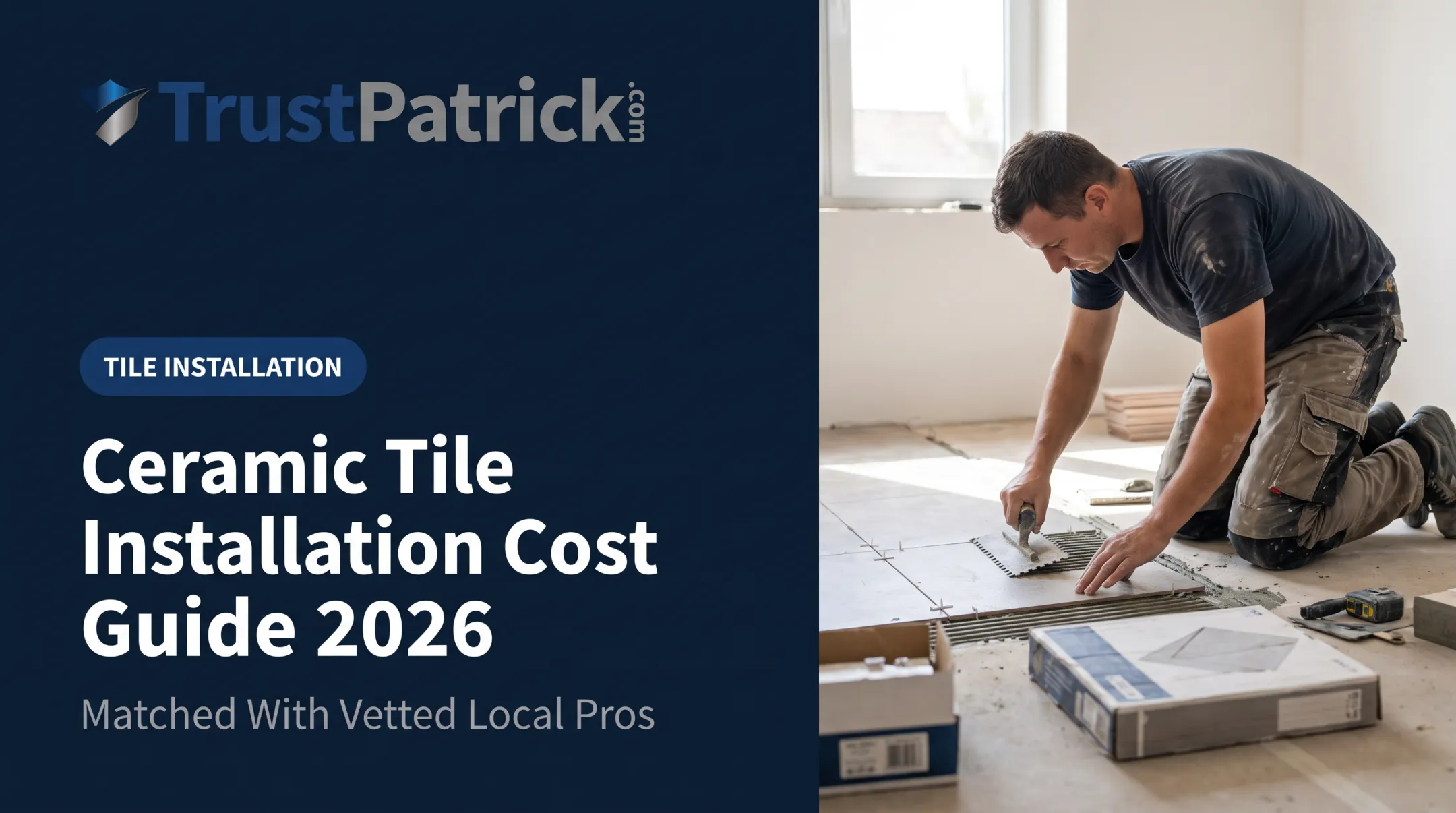
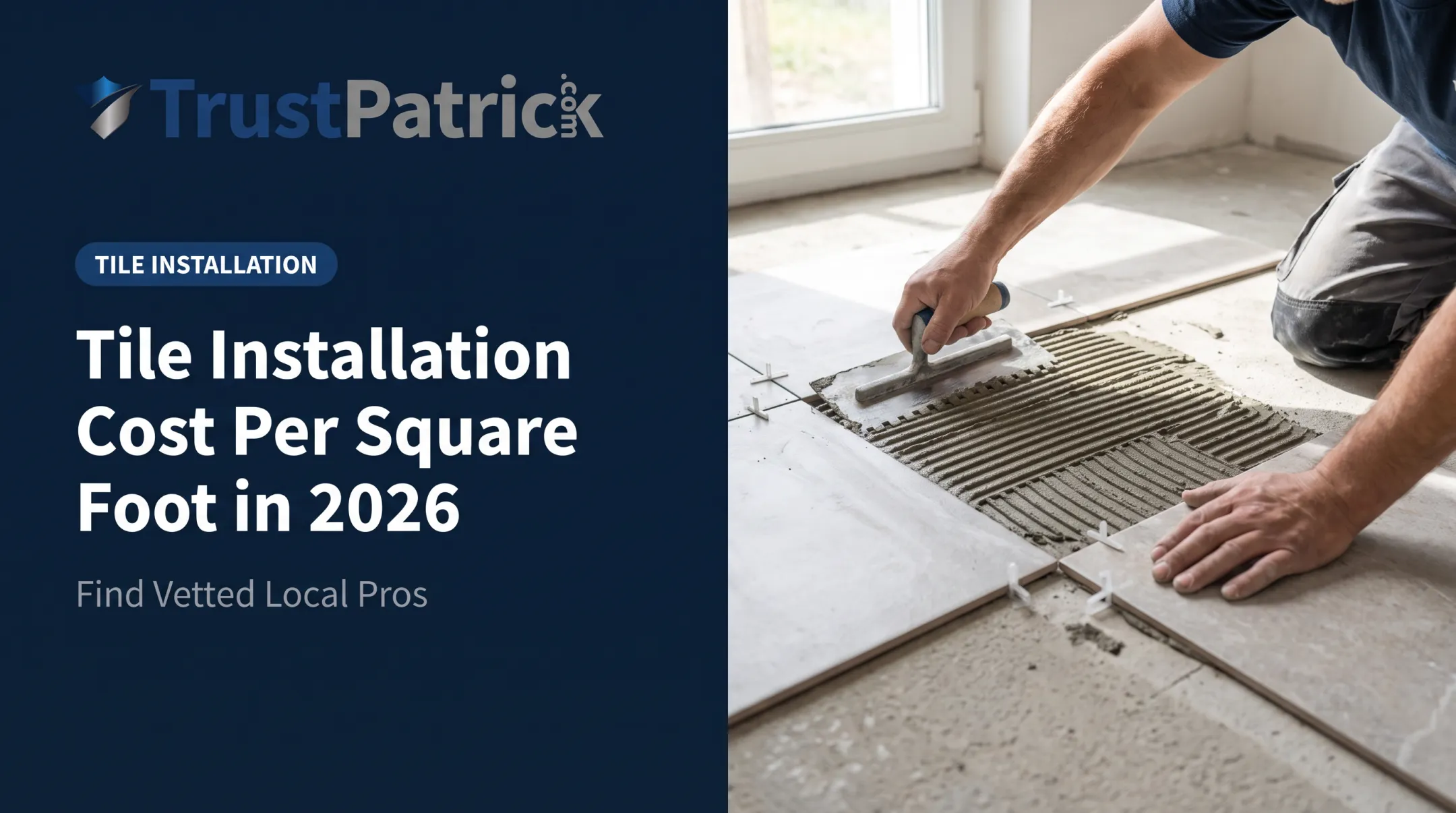
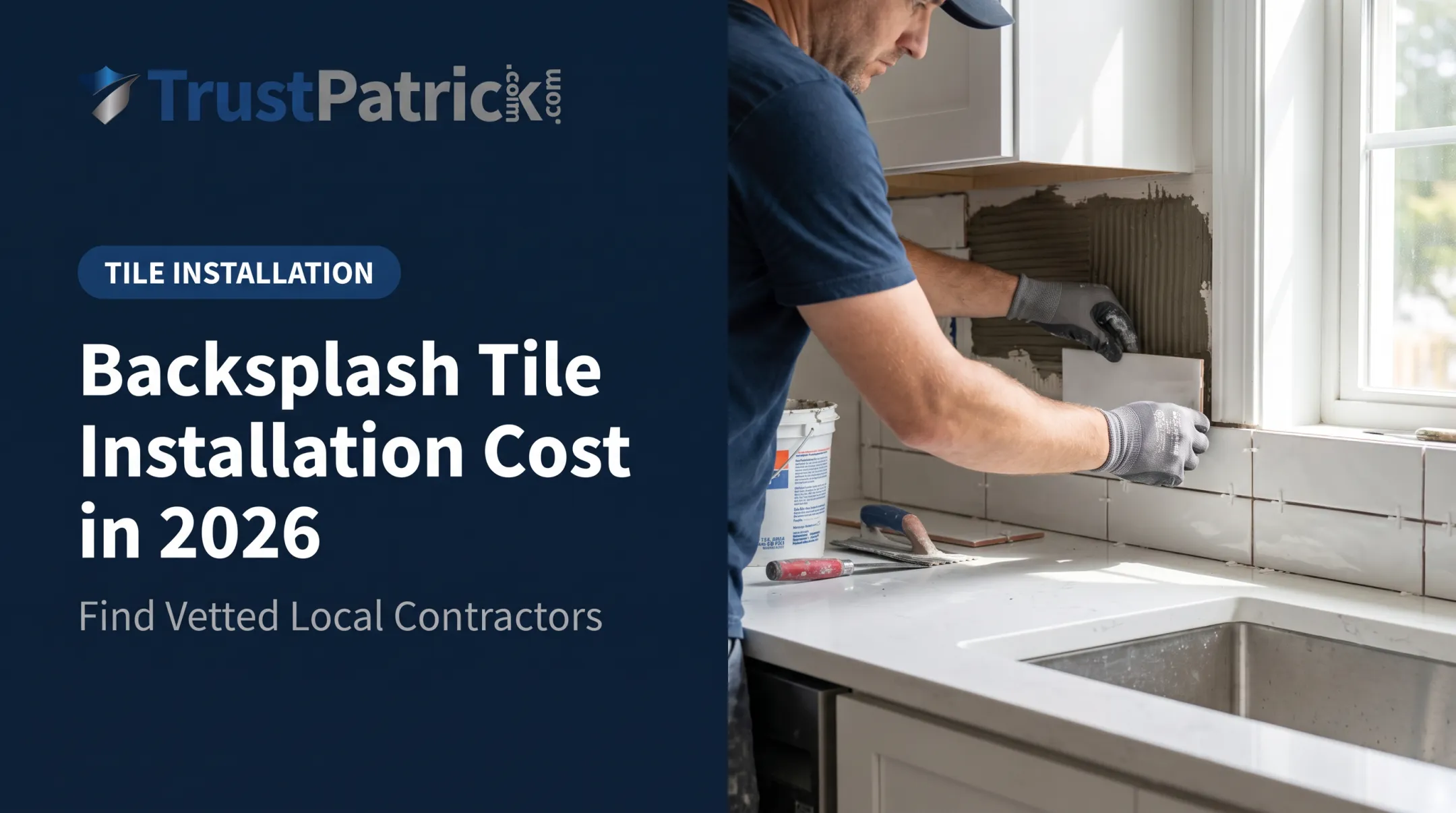
The real story: tile installation cost swings widely based on tile type, room, pattern, region, and what's hiding under your existing floor. There's no single "right" price.
This guide breaks down 2026 pricing ranges, the biggest cost drivers, a full cost breakdown, and practical ways to budget smart before you sign a contract.
TL;DR
- National average project cost: around $2,000, with most homeowners spending $400–$6,500
- Per square foot: $7–$75+ installed, depending on material and complexity
- Biggest cost drivers: tile material, labor complexity, room type, and regional labor rates
- Ceramic and simple layouts keep costs down; stone, large-format tile, and intricate patterns push them up
- Get multiple contractor quotes before hiring—best way to avoid overpaying
How Much Does Tile Installation Cost in 2026? (Pricing Overview)
Tile installation pricing varies widely by material, labor complexity, prep work, and location. Most homeowners trip up on the same three budgeting mistakes:
- Underestimating labor: treating the tile price as the full project cost
- Skipping prep costs: subfloor repair and waterproofing add up fast
- Leaving out waste allowance: cuts, breakage, and pattern matching inflate material needs
Typical Cost Range
| Tier | Price per sq. ft. | What you get |
|---|---|---|
| Entry-level | $7–$15 | Basic ceramic, straight-set, small area |
| Mid-range | $15–$30 | Porcelain, standard pattern, average room |
| High-end | $30–$75+ | Natural stone, complex pattern, large format |

These ranges typically include labor, tile, and basic setting materials. They usually exclude demolition, subfloor repair, and waterproofing membranes. Those extras catch a lot of homeowners off guard.
According to Angi's 2026 tile installation data, the national average total project cost sits around $2,000. Most homeowners spend between $400 and $6,500 depending on scope.
Because price swings so much by material and region, multiple quotes are the only reliable way to know what’s fair for your project. TrustPatrick matches homeowners with up to three screened, background-checked local contractors—no spam, no sales pressure—so you can compare real bids before you commit.
Key Factors That Affect Tile Installation Cost
Pricing depends on material, application type, layout complexity, pattern choice, location, and subfloor condition. Here's how each factor affects your budget.
Tile Type and Material Quality
Material choice alone can double or triple your budget. Per Angi's 2026 breakdown:
- Glazed ceramic: $4–$15/sq. ft.
- Porcelain: $2–$15/sq. ft.
- Natural stone: $5–$45/sq. ft.
- Glass tile: $10–$180/sq. ft.

Stone and glass command higher labor because they're harder to cut precisely, more prone to chipping, and often require specialized blades or setting techniques.
Room or Application Type
Showers and backsplashes cost more per square foot than open floors. Waterproofing requirements and precision cuts around fixtures drive up labor time. Angi reports typical project ranges of:
- Bathroom floor: $300–$1,300
- Backsplash: $480–$1,500
- Shower: $1,800–$5,000
Showers require full waterproofing coverage under the entire tiled area, not just spot treatment. That full coverage is a technical standard, not a suggestion.
Size and Layout Complexity
Larger rooms often lower your per-square-foot rate since setup time gets spread across more tile. Irregular layouts, tight corners, and obstacles like islands or vanities raise costs because they mean more cuts and more time.
Pattern Choice
Herringbone, chevron, and diagonal layouts add labor time due to precise cutting and alignment. Complex patterns increase both waste and installation hours. The exact markup varies by installer and layout, so get a pattern-specific quote rather than assuming a flat percentage.
Geographic Location
Labor rates vary by region with cost of living and contractor demand—metro and coastal markets often run higher than inland or rural areas. Check local quotes instead of leaning only on national averages.
Subfloor Condition and Prep Needs
Hidden problems under old flooring can raise your final bill fast. Demo, leveling, and waterproofing aren't optional extras once uncovered. They're often mandatory before new tile goes down.
Cost Breakdown of a Tile Installation Project
Total cost includes far more than the tile itself. Here's what actually shows up on a full estimate.
| Cost Component | Type | Typical Range |
|---|---|---|
| Tile material | One-time | $2–$180/sq. ft. |
| Installation labor | One-time | $3–$22/sq. ft. |
| Setting materials (thinset, grout, membrane) | One-time | $2–$5/sq. ft. |
| Tile removal | One-time | $2–$7/sq. ft. |
| Subfloor repair | One-time | $3–$10/sq. ft. |
| Professional sealing | Recurring | $200–$700 per area |
| Ongoing maintenance | Recurring | $200–$600 per visit |

Tile is usually the largest line item, from basic porcelain to premium glass. Labor moves with tile hardness, pattern, and room complexity.
Setting materials are often left out of ballpark quotes, so ask for them line by line. Tile removal averages about $3.50/sq. ft., per Angi's 2026 tile removal guide.
Natural stone needs periodic sealing. Grout needs occasional resealing on any tile type.
Low-Cost vs High-Cost Tile Installation — What's the Difference?
Budget ceramic jobs and premium stone installations differ in durability, finish quality, and how long the work holds up, not only in price.
Durability and Lifespan
- Lower-cost: Standard ceramic holds up adequately in low-traffic rooms and light residential use
- Higher-cost: Porcelain and natural stone last far longer in kitchens, entries, and other high-traffic zones when installed correctly
Installation Precision and Finish Quality
- Lower-cost: Basic straight-set layouts tolerate minor lippage and simpler substrate prep
- Higher-cost: Leveling systems, tighter joints, and stricter tolerances deliver a cleaner finish and fewer callbacks
Long-Term Value and Resale Impact
Lower-cost tile is functional but may need earlier replacement, which adds cost over time. Higher-cost tile holds up better, but tile-only resale return isn't tracked separately in national remodeling data.
What we do know from the 2025 Cost vs. Value Report: a midrange bathroom remodel recoups about 80% of cost at resale, while a midrange major kitchen remodel recoups roughly 51%. Those are whole-remodel figures. Tile is one factor among many, not an isolated ROI line item.
How to Budget Smart and Reduce Tile Installation Costs
The right cost balances quality, what you actually need, and long-term value—not just the lowest bid.
- Measure accurately and add a 10–20% waste allowance for cuts and pattern complexity
- Use simple patterns for most of the surface and save complex layouts like herringbone for a feature wall or accent area
- Handle demo yourself if it's safe to do so, but confirm with your installer beforehand; some contractors won't warranty work over DIY prep
- Budget a 15–20% contingency for hidden costs like subfloor repair or waterproofing surprises
- Compare at least three itemized quotes from qualified, background-checked local contractors rather than accepting the first bid

That last step is where most of the savings show up. A single quote is one data point, not a market rate. TrustPatrick's no-obligation, spam-free matching process lets you request and compare estimates from vetted professionals in your area so you can see where any bid stands before you decide.
Frequently Asked Questions
What is the typical labor cost for installing tile floors?
Labor generally runs $3–$22 per square foot, depending on tile hardness, pattern complexity, and regional rates. Simple ceramic in a straight-set pattern sits at the low end; intricate stone patterns push toward the higher end.
How much does tile installation cost per square foot in 2026?
All-in costs (material plus labor) typically range from $8 to $60+ per square foot. Most mid-range residential projects using porcelain with a standard pattern land between $15 and $30 per square foot.
Is it cheaper to tile a floor or a wall?
Floor tile is generally less costly to install than wall or backsplash tile per square foot. Floor tiles tend to be larger and install faster, while wall applications require more precise cuts and detail work.
Does a complex pattern like herringbone really cost more?
Yes. Patterns like herringbone and chevron increase labor time due to precise cutting and alignment, and they typically waste more material. Get a pattern-specific quote since the premium varies by installer.
Do I need a permit for tile installation?
Rarely, unless the project involves plumbing changes, structural work, or new wall openings. Requirements vary by city, so check with your local building department before starting.
Does new tile installation add value to my home?
Tile is part of broader remodeling projects that show strong resale returns — midrange bathroom remodels recoup around 80% of cost, per 2025 industry data. Tile-only ROI isn't tracked separately, but quality tile work supports overall remodel value.