Most tiny homes aren't hooked up to city sewer lines. That means wastewater management isn't optional — it's a legal requirement. In fact, roughly 16% of US households rely on septic systems rather than public sewers, according to a 2024 analysis of American Housing Survey data. For tiny home owners building outside city limits, that percentage is even higher.
This guide covers system types, sizing, realistic costs, legal alternatives, and how to find someone qualified to install it all correctly.
Key Takeaways
- Foundation-based tiny homes need a code-compliant septic system sized for potential occupancy, not headcount
- Soil conditions, bedroom count, and local health codes set system size—and your total cost
- Composting toilets and holding tanks are legal in some areas, with strict maintenance and permit limits
- A licensed local contractor helps avoid failed permits, undersized systems, and costly rework
Do Tiny Homes Need a Septic System?
If your tiny home isn't connected to municipal sewer and has standard flush toilets, most US jurisdictions require an approved onsite wastewater system. That rule is a legal requirement, not optional.
"Piggybacking" onto an existing septic system (for example, a tiny home on a family member's property) is sometimes possible, but only after a professional assessment. An engineer or septic designer must confirm the existing tank and leach field can handle the added load.
Skip that step and you risk backups, system failure, and fines.
Rules also shift depending on how your tiny home is classified:
- Foundation-built tiny homes generally fall under standard building and health codes
- Tiny homes on wheels (THOWs) are often treated as recreational vehicles instead
Larimer County, Colorado is a useful example. A THOW parked on a lot may use a full onsite wastewater system, a sealed vault, or a vaulted privy. A foundation tiny house must have an approved, permitted system—most often a septic tank with a leach field—per Larimer County guidance.
Bottom line: don't assume your tiny home is exempt just because it's small. Health departments regulate based on wastewater output and dwelling classification, not square footage.
Choosing the Right Septic System Type for a Tiny Home
Not every tiny home needs the same setup. The right system depends on your land, soil, and how you plan to live.
Conventional Septic Tank and Leach Field
This is the standard option for tiny homes on permanent foundations with enough land and decent soil percolation. The EPA describes it simply: a septic tank plus a drainfield where effluent gets treated by soil microbes as it filters through gravel and trenches.
Best fit when:
- You have adequate lot size and setbacks
- Soil percolation tests pass local standards
- The home sits on a permanent foundation
Aerobic Treatment Units (ATUs)
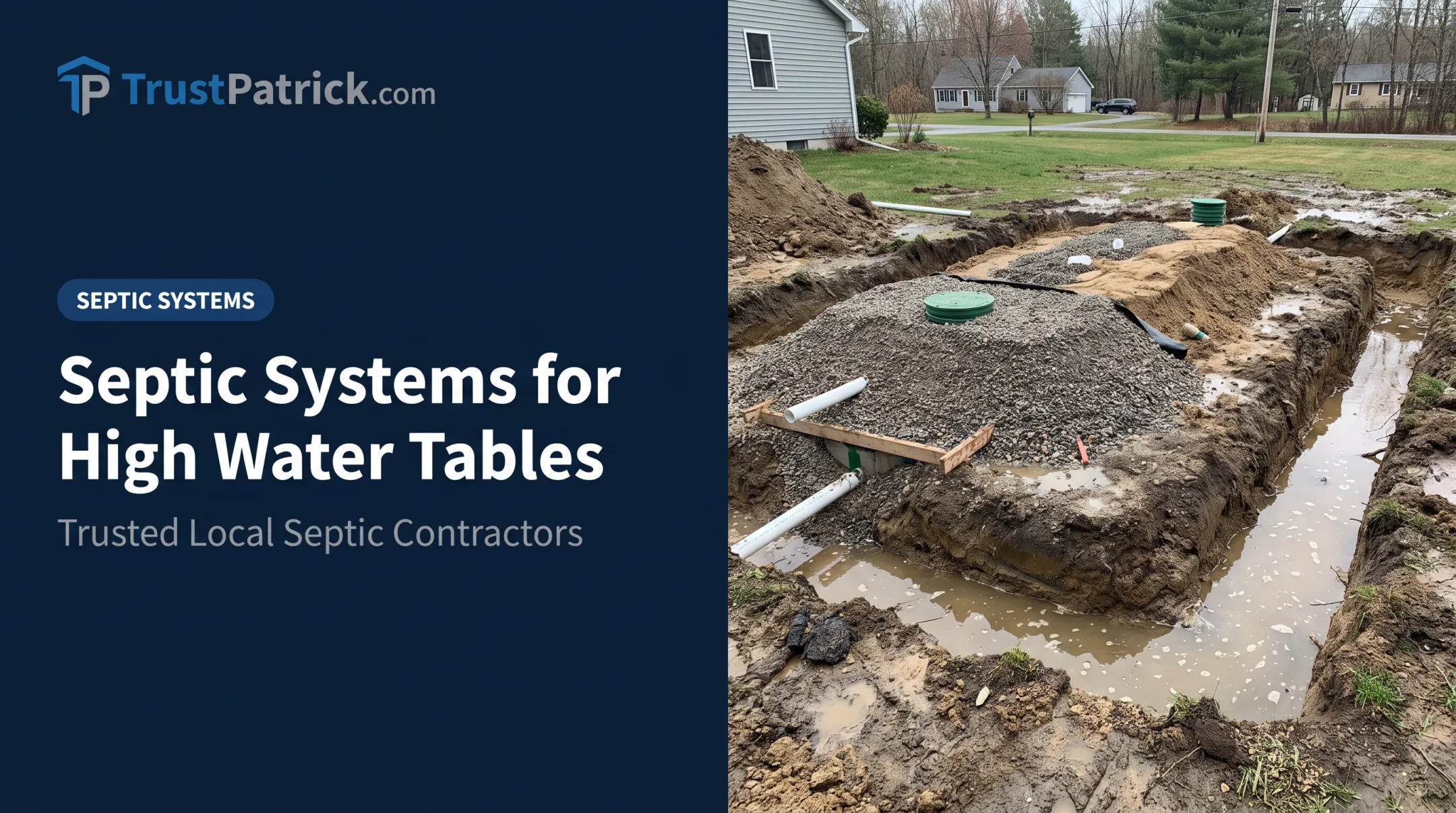
If your lot is small, your soil is poor, or groundwater sits too close to the surface, an ATU may be your only compliant option. These units pump oxygen into the tank to boost bacterial activity, giving you more treatment power in a smaller footprint. Expect scheduled maintenance; ATUs need regular service, not occasional check-ins.
Best fit when:
- Lot size or poor soil rules out a standard drainfield
- High groundwater limits conventional treatment depth
- Local code requires higher treatment before discharge
Composting Toilets Plus Greywater Systems
Eliminating blackwater with a composting toilet can sometimes reduce or remove the need for a full septic system. But greywater (sink, shower, laundry water) still needs to meet code. Many counties require the composting toilet itself to carry NSF or equivalent certification before approval.
Best fit when:
- You want to cut or avoid full blackwater septic capacity
- You’re prepared to manage composting toilet upkeep
- Greywater disposal can still meet county rules
Holding Tanks
A mobile-friendly, temporary option. Think of it as a sealed container with no outlet — it fills up, and you call a pump-out service. No soil treatment happens here.
Best fit when:
- The setup is temporary, seasonal, or highly mobile
- Soil-based treatment isn’t allowed or practical on site
- You can budget routine pump-outs
Code and site constraints still decide the final design. Beyond system type, two factors trip up tiny-home plans:

- Sizing follows bedrooms or rated occupancy, not headcount. Most state codes ignore how many people live there today. A one-bedroom tiny home is usually sized the same for one resident or two.
- Gravity needs fall. If the site lacks enough downhill slope to move wastewater to the tank, plan on a pump station or lift system.
What Size Septic Tank and What Will It Cost?
Septic tank sizing follows bedroom count, not the tiny home's square footage. State minimums differ—here are two examples:
| State | Tank Size Requirement |
|---|---|
| Virginia | 750 gallons for 1–2 bedrooms |
| Washington | 1,000 gallons for up to 4 bedrooms |
Your county health department sets the rule. Confirm local code before you assume any national figure applies.
Cost Breakdown
Installing a full septic system for a small dwelling typically runs $3,589 to $12,463, with a national average around $8,019, according to Angi's 2026 cost data. Common line items:
- Tank only: $500–$900 (smaller) or $700–$1,200 (larger)
- Perc/soil testing: $700–$2,000
- Permits: $450–$2,300
- Labor: about 50–70% of total project cost
- Excavation (if unbundled): $1,500–$6,300

What Drives Costs Up
- Poor soil or failed percolation results
- Sloped, rocky, or hard-to-access terrain
- Proximity to wells or water sources
- Need for a pump station due to insufficient site fall
Ongoing Costs
The EPA recommends inspections every 1–3 years and pumping every 3–5 years. Plan on about $250–$500 per service visit.
Skip that cadence and repair or full replacement can run $5,000–$15,000. For install bids and permit-ready site work, compare quotes from vetted local septic contractors through TrustPatrick.
Alternatives to a Traditional Septic System
Not every tiny home needs a full septic setup. Here's what else is out there, along with the fine print.
Composting toilets
- Pros: no blackwater, works off-grid, lower water use
- Cons: manual waste handling; many states require approved product certification
Greywater recycling systems
- Handle sink, shower, and laundry water only — never toilet waste
- Arizona limits residential greywater flow to under 400 gallons per day and requires groundwater at least 5 feet below the discharge point
- Many counties restrict greywater irrigation on food crops that touch the soil
Portable holding tanks
- Good for tiny homes on wheels (THOWs) or temporary placements
- Require regular pump-outs; not a permanent fix
- Utah rules require tanks to be pumped before winter to prevent freezing damage, plus ongoing leak checks and hauler records
None of these alternatives are universally approved. Always verify with your local health department before committing. What's legal in Oregon may not fly in Ohio.
Permits, Regulations, and the Installation Process
Most counties require a percolation test and site evaluation before approving any septic design. Percolation measures how fast water absorbs into soil. Too fast or too slow, and you may need an alternative design—common on compact tiny-home lots with limited drain-field space.
Installation usually follows this sequence:
- Site evaluation — soil testing and feasibility review
- Design and permit approval — engineer or designer submits plans to the health department
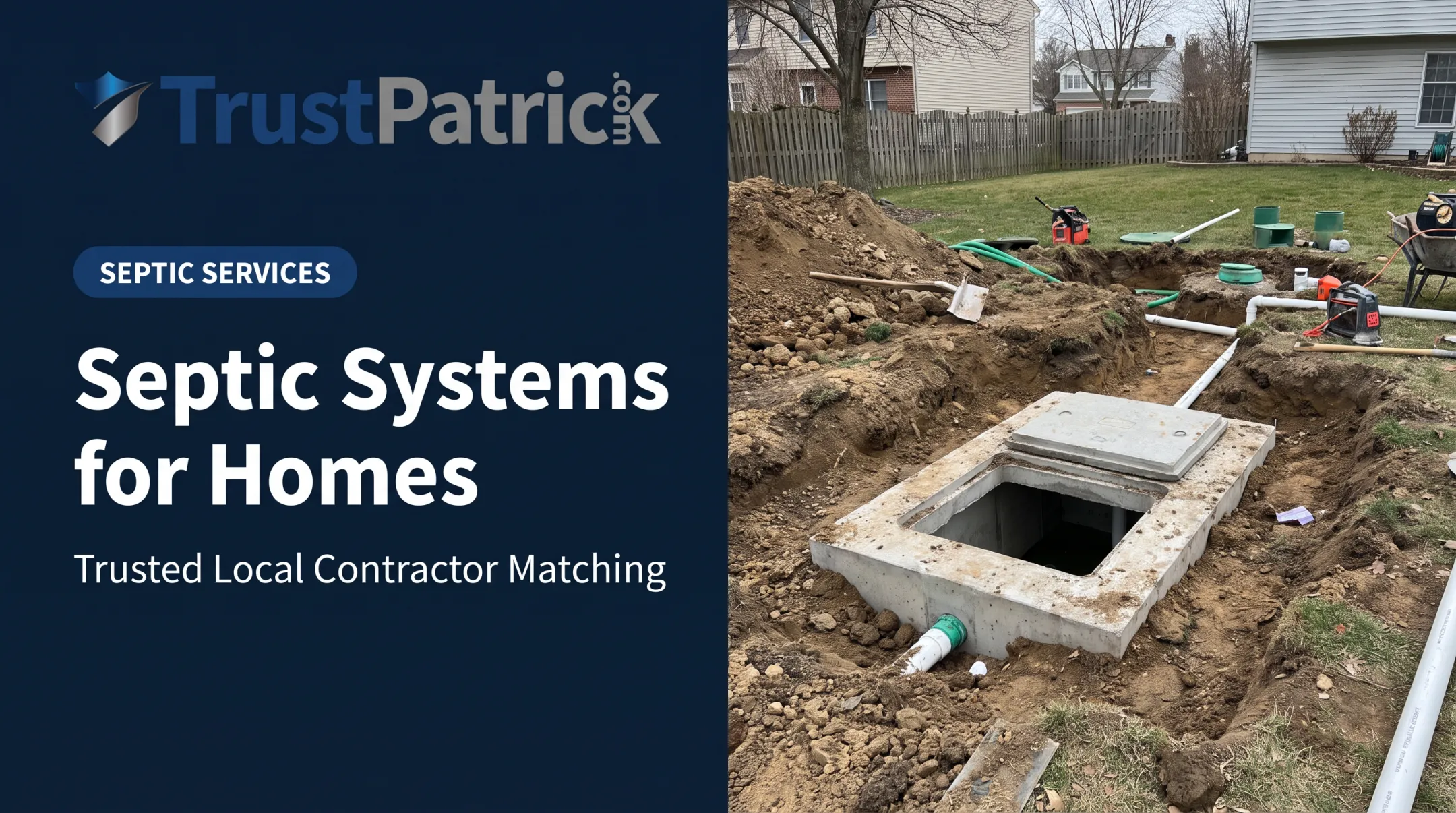
- Excavation — ground prep for tank and leach field
- Tank and leach field installation — tank and field set to the approved layout
- Inspection — occurs before backfilling, often requiring 48 hours' notice to the health department
- Backfill — final step once inspection passes

Permits are typically valid for about a year, so timing your project matters. Skipping any step—especially the pre-backfill inspection—can mean costly rework. A licensed septic contractor coordinates design, permits, and inspections; TrustPatrick can connect you with vetted local pros for the job.
Finding a Qualified Septic Contractor for Your Tiny Home Project
Septic work sits at the intersection of plumbing and environmental compliance. Get it wrong, and you're looking at fines, failed inspections, or a system that fails within a few years. This isn't a job for the lowest bidder from a random search.
A qualified contractor should understand:
- Local percolation and soil requirements
- Bedroom-based sizing rules specific to your county
- Permitting steps and inspection timing
- Site-specific challenges like slope, rocky soil, or proximity to water sources
TrustPatrick can help with that match. Enter your ZIP code to get connected with up to three pre-screened, background-checked local septic contractors, free and with no obligation. You compare quotes side by side without spam or pressure tactics.
Multiple estimates matter more on septic work than on most home projects. Contractors often differ on system type, drain field layout, and who handles the permit package, so comparing options early protects both budget and timeline.
Frequently Asked Questions
Do tiny homes need a septic system?
Yes. Any tiny home with flush toilets that isn't connected to municipal sewer generally requires a code-approved septic or equivalent onsite wastewater system. Requirements vary by whether the home is on a foundation or wheels.
What size septic tank do you need for a tiny home?
Sizing is based on potential occupancy or bedroom count, not square footage. Typical minimums range from 750 gallons for a one-bedroom dwelling to 1,000 gallons or more, depending on your state's code.
How much does it cost to install a septic system for a tiny home?
Expect $3,589 to $12,463, with a national average near $8,019. Costs rise with poor soil conditions, difficult terrain, or the need for a pump station.
What can I use instead of a septic system for a tiny home?
Composting toilets, graywater systems, and holding tanks are all potential alternatives. Each has legal restrictions that vary by state and county, so verify compliance before installing.
How long does it take to install a septic system?
Timelines vary by county, but the process moves through site evaluation, design approval, excavation, installation, and final inspection. Permits are typically valid for about a year, giving you a rough project window.
Can I connect my tiny home to an existing septic system?
Sometimes, but it requires a professional capacity assessment to confirm the existing tank and leach field can handle the added load, plus local permit approval before you proceed.