Basements sit below grade, which makes them naturally vulnerable to groundwater and surface runoff. Interior drainage systems are one of the most effective, least invasive ways to manage that water without tearing up your yard. This guide covers what these systems are, the main types available, how they stack up against exterior alternatives, and what installation and upkeep actually involve.
Key Takeaways
- Interior drainage systems collect water that's already entered your basement and route it to a sump pump for removal.
- Common setups include interior French drains, floor drains, and sump pump/pit combinations.
- They cost less and install faster than exterior excavation, but depend heavily on a working sump pump.
- Match the system to foundation age, water severity, and budget.
Understanding Interior Basement Drainage Systems
An interior basement drainage system is a network installed beneath or along the basement floor's perimeter. Its job: intercept water before it pools and channel it toward a sump pump for removal outside the home. These systems typically address three water sources:
- Surface water seepage — rain or melting snow finding its way through foundation cracks
- Groundwater and hydrostatic pressure — water table pressure pushing moisture through walls and floors
- Condensation — humid air meeting cool basement surfaces Left unmanaged, basement moisture doesn't just sit there quietly. It leads to mold growth, weakened structural materials, and potential health complications for anyone spending time in the space. Insurance data backs up how costly this can get: Triple-I reports that water damage and freezing claims averaged $13,954 per claim between 2018 and 2022, affecting roughly 1.6% of insured homes. That's not a basement-specific number, but it shows how expensive unmanaged water intrusion can become. Where that water goes matters too. Do basement drains connect to the sewer? Usually, no. Most interior systems discharge water to a sump pump, which pumps it outside the home, not into the municipal sewer system. Some older homes have direct floor drain-to-sewer connections, but modern code generally discourages this because it risks backups during heavy storms. Interior systems tend to be the go-to choice for finished basements or homes where excavating around the foundation simply isn't practical.

Types of Interior Basement Drainage Systems
Interior basement drainage usually combines three jobs: collect water at the perimeter, catch water on the floor, and move it out through a sump. Most homes use more than one of the options below.
Interior French Drains and Footing Drains
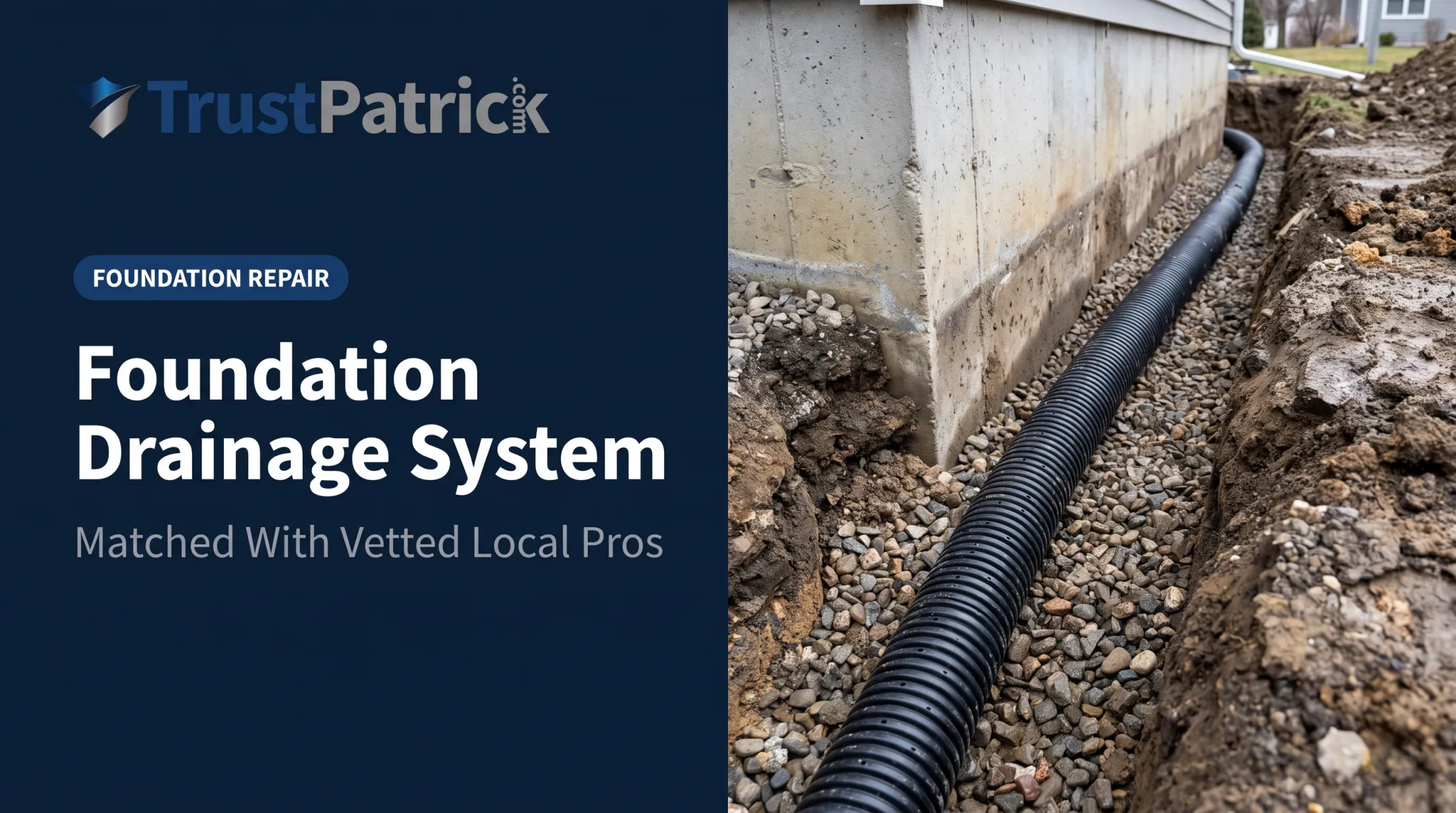
An interior French drain is a perforated pipe in gravel, set under the floor along the foundation’s inside perimeter. In basements, that layout is the usual interior footing-drain approach: it intercepts groundwater, eases hydrostatic pressure, and sends water to a sump pit before it can push through walls or joints.
Floor Drains
Floor drains catch surface water, appliance leaks, and spills, then route them to the main drain line or sump pit. They support perimeter drainage; they do not replace it.
Sump Pumps and Sump Pits
The sump pit and pump collect and discharge everything the drains gather. Because the full system fails if this part fails, a battery backup is essential. Storms that flood basements often cut power at the same time, and backup power keeps the pump running when you need it most.
Complementary Tools
These extras support drainage but do not replace it:
- Dehumidifiers cut residual humidity and condensation after water is controlled
- Interior waterproofing membranes add a wall moisture barrier beside the drain system
- Discharge lines and check valves carry sump water away from the foundation and block backflow
Used together, perimeter drains, floor drains, and a reliable sump form the core interior system; membranes and dehumidifiers handle moisture that drainage alone does not.

Interior vs. Exterior Drainage: Which Is Right for Your Home
| Factor | Interior System | Exterior System |
|---|---|---|
| Disruption | Breaks a portion of basement floor | Excavates entire foundation perimeter |
| Typical cost | ~$40–$100 per linear foot | ~$10–$100 per linear foot (varies with depth/access) |
| Best for | Finished basements, limited yard access | Severe hydrostatic pressure, bowing walls |
| Access for repairs | Accessible without re-excavation | May require digging to service |
Pricing varies by scope and site conditions. Fixr's 2025 data puts interior French drains at about $40–$100 per linear foot (around $50 on average), with exterior pricing driven heavily by depth and access.
Interior systems usually win on convenience: less yard damage, faster install, and easier long-term inspection. Choose based on the problem you’re solving:
- Interior: Finished basements, tight lot access, or when you want repairs without re-excavating the yard
- Exterior (or both): Bowing walls, severe hydrostatic pressure against the foundation, or water that must be stopped before it reaches the structure
A qualified contractor can confirm whether interior drainage alone is enough or if exterior work should be part of the plan.

Installation Process and Cost Factors
A typical interior installation follows this sequence:
- Assessment: a contractor evaluates water entry points, foundation condition, and floor thickness
- Floor cutting: a channel is cut along the basement perimeter
- Drain and gravel placement: perforated pipe and gravel go into the trench
- Sump pump connection: the drain ties into the sump pit
- Floor resealing: concrete is poured back over the trench The product recommended—standard drain tile or a reinforced trench system—depends on footing condition, slab thickness, and how much water the system must handle. According to Basement Systems, interior work often finishes in one to two days, versus a week or more for exterior excavation, which keeps household disruption lower. What drives cost:
- Linear feet of perimeter trench required
- Sump pump type, capacity, and backup needs
- Slab thickness, footing condition, and concrete repair scope
- Water volume the system must manage
- Floor finishing or restoration after resealing Because pricing and system recommendations vary widely between contractors, multiple quotes matter. On TrustPatrick, homeowners enter their ZIP code and get matched with up to three pre-screened, background-checked local contractors, then compare estimates side by side with no obligation to hire. There are no paid rankings and no pay-to-play listings, which helps you avoid spam calls and pressure tactics common in this industry.

Maintenance and Long-Term Care
Interior drainage systems aren't "install and forget." A few habits keep them working when you need them:
- Test your sump pump twice a year, minimum. Pour water into the pit to confirm it activates and discharges properly. Never reach into the pit during testing.
- Check battery backups monthly. Run a full system test every three months, following your manufacturer's guidance.
- Keep gutters and downspouts clear. Managing surface water reduces the load on your interior system.
- Clear floor drains of sediment and clogs. Check grading around your home periodically so water sheds away from the foundation.
- Monitor humidity with a hygrometer. Keep relative humidity below 60% to help stop mold before it starts.
These small checks catch problems while they're still cheap to fix, long before they turn into a flooded basement during the next big storm.
Frequently Asked Questions
What are the three types of drainage systems?
The three main types are surface drainage, subsurface drainage (interior or exterior footing drains and French drains), and slope or gravity drainage. Each handles a different water source, from rainfall to groundwater pressure.
Do all basement drains go to the sewer?
Most modern interior basement drains route water to a sump pump that discharges outside the home, not into the sewer. Some older homes have direct floor drain-to-sewer connections, which can risk backups during heavy rain.
What is a French drain system in a basement?
A French drain is a gravel-covered, perforated pipe system installed along the foundation perimeter, either inside or outside. It collects groundwater and redirects it to a sump pump or another discharge point.
How much does an interior drainage system typically cost?
Costs vary with linear footage, footing condition, and local labor rates, and often fall between $40 and $100 per linear foot. Multiple local quotes give the most accurate figure for your home.
Can I install an interior drainage system myself?
Some floor drain add-ons are DIY-friendly, but full perimeter drainage tied to a sump pump needs professional tools and experience. Correct slope and sealing matter, and mistakes are costly to fix.
How do I find a trustworthy contractor for this type of work?
TrustPatrick matches homeowners with up to three vetted, background-checked local contractors by ZIP code, with no paid rankings or spam. You can compare estimates and reviews side by side and choose with confidence.