Many homeowners struggle to understand what type of system they have, how much maintenance actually costs, and when a quirky smell means "call someone now" versus "check back next week." This confusion gets expensive fast if it leads to neglect.
This guide covers how septic systems work, the main types available, realistic cost ranges, maintenance habits that extend a system's life, warning signs of failure, and how to find a contractor you can actually trust.
Key Takeaways
- Septic systems treat wastewater on-site using a tank and drainfield, not a municipal sewer connection.
- Pumping every 3-5 years and mindful drain habits prevent most costly failures.
- Installation costs run about $3,593 to $12,463, depending on system type and site conditions.
- Hiring a licensed, vetted septic contractor protects your health and your property investment.
What Is a Septic System and How Does It Work?
A septic system, sometimes called an onsite sewage facility, treats household wastewater right on your property instead of piping it to a city treatment plant. The EPA defines the basic setup as a septic tank plus a drainfield (also called a leach field) that disperses treated liquid into the soil.
Here's what's actually inside a working system:
- Septic tank – a buried, watertight container that holds wastewater long enough for solids to separate
- Scum layer – oils and grease that float to the top
- Sludge layer – heavier solids that sink to the bottom
- Effluent – the relatively clear liquid in the middle, which exits the tank
- Outlet baffle – prevents solids from escaping into the drainfield
- Drainfield – a network of trenches where effluent filters through soil for final treatment

How Wastewater Actually Moves Through the System
Wastewater leaves your house through drain lines and enters the tank first. Solids settle or float, and the liquid effluent flows out through the baffle into the drainfield. There, soil bacteria finish the treatment process naturally before the water reenters the groundwater.
Yes, sink water goes into your septic system. So does water from showers, laundry, and garbage disposals — all of it flows into the same tank as toilet waste, according to EPA guidance.
Septic vs. Public Sewer: Key Differences
Septic owners skip monthly sewer bills, but they take on full maintenance responsibility themselves. A few practical differences:
- No monthly utility bill — pumping, inspections, and repairs come out of pocket
- Full maintenance responsibility stays with you or your contractor
- Alternative systems with pumps or float switches need a service contract and annual inspection, per the EPA
Types of Septic Systems Explained
Homeowners often ask about "the three types" of septic systems. Broadly, that breaks down into conventional systems, advanced secondary treatment systems, and tertiary treatment systems. The EPA's actual list is longer and explicitly not all-inclusive, but these three categories cover what most residential properties will encounter.
Conventional and chamber systems are the most common and affordable option. They use a septic tank paired with a gravel or chamber drainfield, relying on soil microbes to finish treatment. These work best on properties with permeable, well-draining soil.
Advanced systems, like aerobic treatment units (ATUs), inject air into wastewater to speed up treatment, similar to a mini municipal plant. These suit:
- Smaller lots without room for a large drainfield
- Poor or clay-heavy soil
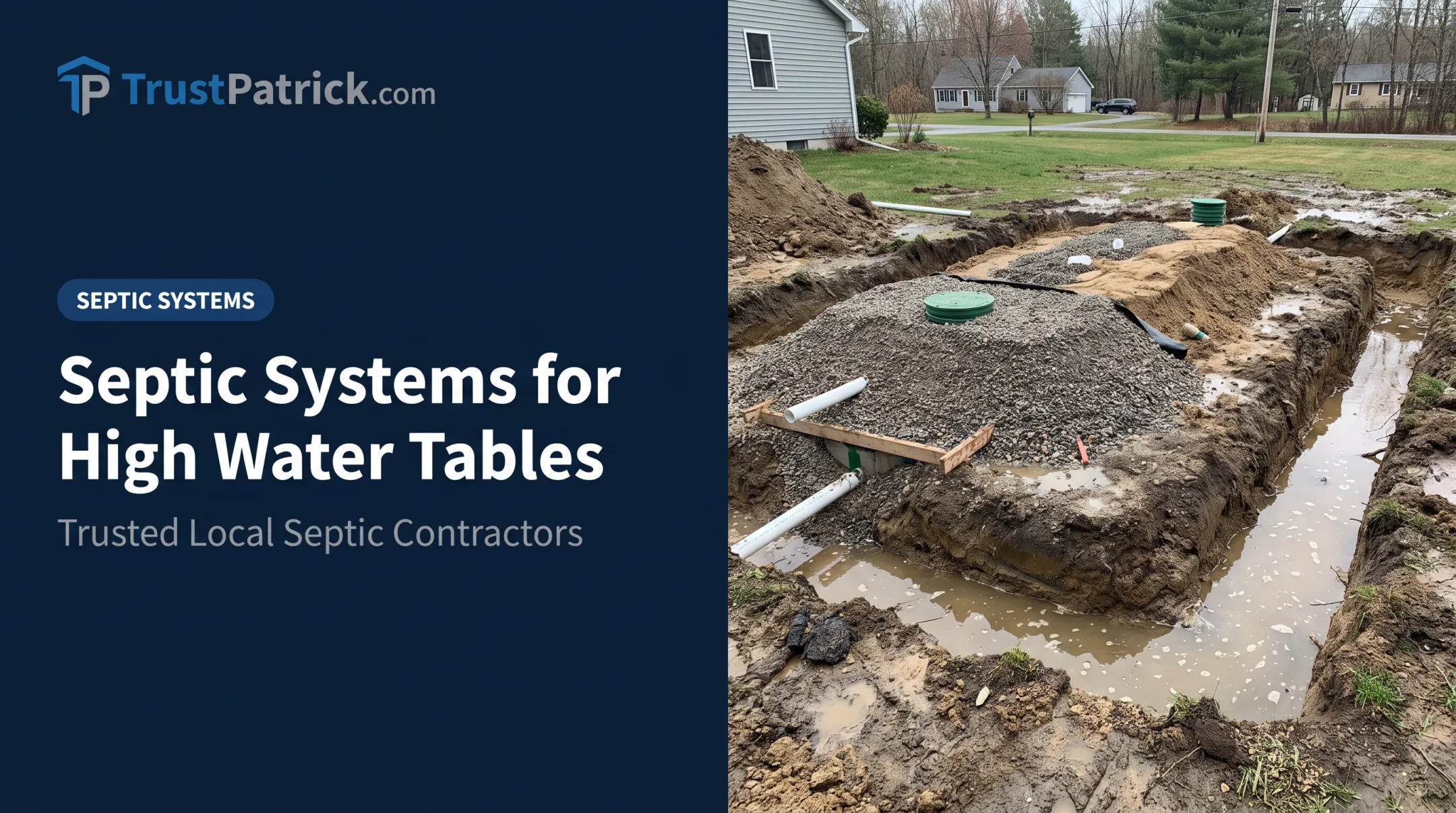
- High water tables
Tertiary treatment systems add a final polishing step after secondary treatment. Nitrogen-reducing units and UV disinfection fall in this group. They serve properties near sensitive waterways under stricter environmental rules, and they need state approval plus site-specific engineering—not a one-size-fits-all upgrade.

Other EPA-identified options include drip distribution, mound systems, recirculating sand filters, and constructed wetlands. A licensed professional should evaluate your soil, lot size, and local codes before you choose any type. TrustPatrick can connect you with vetted local septic contractors for that assessment.
Cost of a Septic System
Installing a new conventional septic system typically runs $3,593 to $12,463, according to Angi's 2026 data. Fixr reports a slightly narrower average of $4,500 to $9,000, with roughly $6,100 as typical for a standard 1,000-gallon anaerobic system.
Several factors drive the final price:
- Conventional setups cost far less than aerobic treatment units (ATUs) or tertiary systems
- Concrete, plastic, and fiberglass tanks sit at different price points
- Larger drainfields cost more to excavate and install
- Difficult soil or a high water table adds engineering and design costs
Drainfield installation alone starts around $5,000. Replacing a failed drainfield is one of the costliest repairs a homeowner can face.
Ongoing costs to budget for:
- Pumping every 3–5 years to clear solids
- Periodic inspections to catch issues early
- Minor repairs such as baffle replacement or lid fixes

Installation costs swing widely by region and site complexity. Get multiple quotes from local contractors before you commit to any one bid.
Septic System Maintenance and Care Best Practices
Consistent maintenance is the cheapest insurance you'll ever buy for a septic system. The EPA recommends inspection at least every three years and pumping every three to five years, depending on household size and water usage.
Key maintenance habits:
- Pump on schedule – every 3-5 years, adjusted for household size
- Inspect regularly – do a quick DIY visual check each year; book a professional inspection at least every three years
- Clean the effluent screen – check your owner's manual for the recommended interval
- Stagger heavy water use – spread laundry and dishwasher loads across the week instead of running them all in one day

What Never Goes Down the Drain
These items disrupt the bacterial balance your system depends on:
- Grease and cooking oils
- Wipes (even "flushable" ones)
- Feminine hygiene products, diapers, and dental floss
- Coffee grounds
- Harsh chemicals and solvents
Stick to toilet paper and human waste only.
Keep a simple maintenance log noting your tank's age, material, and pumping history. This information is invaluable if you ever sell the home or need a professional to troubleshoot.
Warning Signs of Septic System Failure
Catching problems early saves thousands of dollars. Watch for:
- Slow-draining sinks or tubs throughout the house
- Gurgling sounds in the plumbing
- Sewage odors near the tank or drainfield
- Standing water or unusually lush, bright-green grass over the drainfield
Ignoring these signs risks groundwater contamination and turns a manageable repair into an emergency replacement. If you notice any of these symptoms, contact a licensed septic professional right away — waiting rarely makes the problem cheaper.
Finding a Trusted Septic Contractor
Septic work touches your health, your property value, and local environmental regulations. Skip guesswork and the lowest bidder from a quick search.
TrustPatrick connects homeowners with up to three vetted, background-checked local septic contractors through a free, no-obligation process. Enter your ZIP code and get matched—usually in under two minutes—with no spam or pressure tactics.
Matched pros can handle:
- Septic installation and repair
- Tank pumping
- Drainfield repair
- Aerobic system work
Before hiring anyone, ask prospective contractors:
- Are you licensed for septic work in this state?
- What's your experience with my specific system type?
- What warranty terms cover the installation or repair?
- Can you provide proof of insurance and recent references?
Compare multiple estimates side by side with real homeowner reviews, then hire only after the answers above check out.
Frequently Asked Questions
What is the average cost of a new septic system for a home?
Installation typically ranges from $3,593 to $12,463, depending heavily on system type and site conditions. Compare quotes from local installers for an accurate estimate on your property.
Does sink water go into a septic system?
Yes. All household wastewater, including sinks, showers, and laundry, flows into the septic system alongside toilet waste.
What are the three types of septic systems?
The three main categories are conventional systems, advanced secondary treatment systems (such as aerobic treatment units), and tertiary treatment systems for stricter environmental requirements.
What is the newest septic system?
Nitrogen-reducing and UV disinfection systems are among the newer options, built for properties near sensitive water sources that face stricter environmental standards.
How often should a septic tank be pumped?
Most residential tanks need pumping every 3-5 years, though household size and water usage can shift that timeline.
How do I know if my home has a septic system?
Check your property disclosure documents, look for a tank lid or unusually green patches in the yard, or hire an inspector to confirm.