Foundation drainage systems solve this. French drains, footing drains, proper grading, and sump pumps work together to redirect water before it ever reaches your walls.
This guide covers the main system types, where drains actually belong, warning signs you shouldn't ignore, installation basics, and how to find a contractor who won't cut corners.
Key Takeaways
- Hydrostatic pressure from saturated soil is what actually cracks and bows foundation walls
- Most homes need a combination of drainage methods, not just one
- The 2024 IRC requires drains to sit at or below the footing and extend 12 inches beyond its edge
- Musty odors and efflorescence are early warning signs worth acting on immediately
- Improper installation (wrong slope, missing filter fabric) can make a drainage system useless
What Is a Foundation Drainage System and Why It Matters
A foundation drainage system is a coordinated setup of pipes, gravel, and grading built to collect groundwater and surface runoff, then move it away from your home before it causes damage.
Here's the mechanism most homeowners never think about: hydrostatic pressure. When soil around your foundation becomes saturated, it pushes against your basement or crawlspace walls with real force. Building Science Corporation notes that this pressure can crack foundations, bow walls, or cause gradual settling over time.
Data reviewed by Lawrence Berkeley National Laboratory shows exterior water damage affects roughly 9.9% of U.S. homes, with interior leakage impacting 8.1% — and that's without a national database tracking basement-specific dampness or mold. The real number of affected basements and crawlspaces is likely underreported.
Effective drainage keeps water off the floor and relieves hydrostatic pressure before it cracks walls or shifts the foundation.
Types of Foundation Drainage Systems
Different water problems call for different tools. Here's how the main options break down.
French Drains
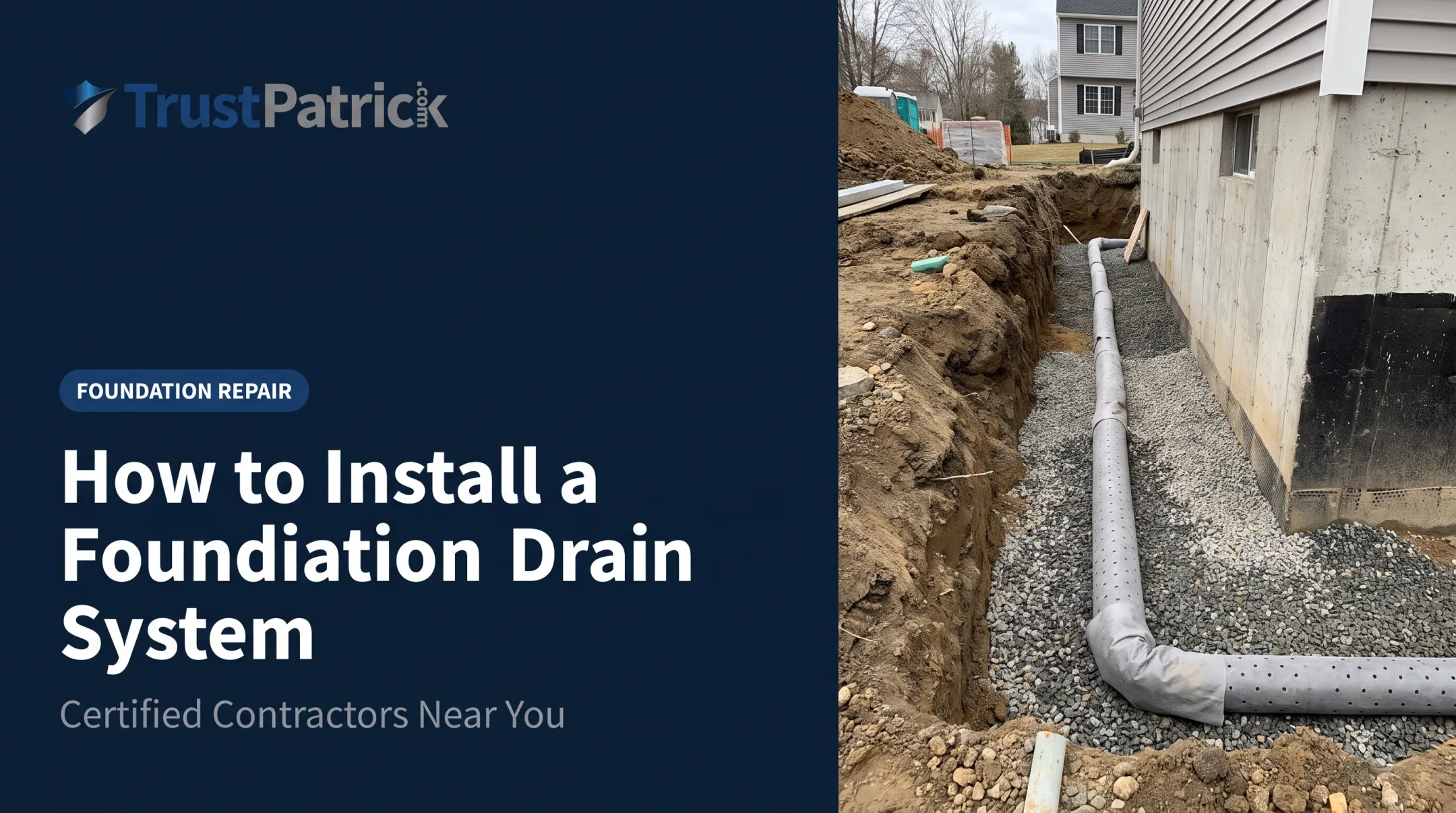
A French drain is a trench with a perforated pipe, surrounded by gravel or crushed stone and wrapped in geotextile fabric. It intercepts water at the surface or shallow subsurface and redirects it away from the foundation.
Footing Drains
Installed at the base of the foundation footing during construction, footing drains work at the deepest, most critical point. They're especially effective in areas with a high water table and can last for decades when installed correctly.
Grading Solutions
Sloping the landscape away from your foundation is the cheapest, lowest-maintenance defense you have. It won't solve serious groundwater issues, but it stops surface runoff from ever becoming a problem in the first place.
Sump Pumps
A sump pump sits in a pit, collects water that drains toward it, and pumps it out and away from the house. It's ideal for flood-prone or flat properties where gravity alone can't move water to a safe discharge point.
Quick comparison:
| System | Best For | Relative Cost |
|---|---|---|
| Grading | First-line defense, any home | Low |
| French drain | Surface/shallow water interception | $2,800–$6,500 total (Fixr) |
| Footing drain | High water tables, new construction | $80–$100/linear foot |
| Sump pump | Flat lots, flood-prone areas | $800–$2,000 |

The most effective setups combine two or more of these—for example, grading plus a French drain, or a footing drain paired with a sump pump as backup.
Where Should a Foundation Drain Be Located?
Location depends on whether you need exterior or interior drainage.
Exterior drains sit alongside or at the base of the footing, outside the foundation wall. Interior drains run along the basement floor perimeter, inside the structure.
The 2024 International Residential Code (R405.1) is specific about placement:
- Drains sit at or below the top of the footing, or below the bottom of the slab
- Gravel or crushed-stone drains extend at least 12 inches beyond the footing's outside edge
- Perforated pipe rests on at least 2 inches of washed gravel, covered with 6 inches more
- Filter fabric protects the system from silt clogging
Proper slope matters too. The drain needs enough grade to move water by gravity toward a discharge point. Exact slope requirements vary by local code and manufacturer specs—confirm the number with your contractor.

Discharge options depend on your property:
- Sloped lots — daylight drainage to a lower exit point on the property
- Flat lots — sump pump discharge when gravity alone can't move water far enough away
Signs Your Home Needs a Foundation Drainage System
Some warning signs show up fast. Others creep in until water is already stressing the foundation.
Watch for:
- Puddling near the foundation after rain
- White, chalky efflorescence on basement walls
- Musty odors that won't go away
- New cracks in walls, floors, or the foundation itself
- Sagging or clogged gutters, or downspouts dumping water too close to the house
Clogged gutters deserve special attention. When they overflow, water pools at the foundation, overwhelms existing drainage, and speeds up foundation damage.
Persistent dampness isn't only a structural issue. The EPA notes that mold exposure can trigger allergic reactions and asthma attacks, and recommends keeping indoor humidity between 30–50%. Moisture control is the biggest factor in mold prevention.
Act early: a hairline crack today can turn into a structural repair costing thousands tomorrow.

Installation, Cost, and Maintenance Considerations
Typical installation process:
- Assess soil type, climate, and water table so the design matches site conditions
- Excavate trenches at the proper depth and slope for gravity flow away from the foundation
- Lay a gravel bed, perforated pipe, and filter fabric to move water and limit clogging
- Backfill and grade so surface water drains away from the structure
- Test the system before finishing the site to confirm flow and catch issues early

Cost ranges vary significantly by system and property:
| Project | Cost Range |
|---|---|
| French drain (total) | $2,800–$6,500 |
| French drain (per linear foot, exterior) | $10–$100 |
| Footing drain (per linear foot) | $80–$100 |
| Sump pump installation | $800–$2,000 |
(Source: Fixr, 2025)
Excavation depth, soil conditions, and access all affect final pricing — which is why comparing quotes from more than one vetted local contractor matters more than trusting a single estimate. TrustPatrick can match you with up to three pre-screened pros in your ZIP code so you can compare scope and price without spam or pressure.
Annual maintenance checklist:
- Clear gutters and downspouts before rainy seasons
- Flush drain lines to prevent sediment buildup
- Test your sump pump and battery backup
- Inspect the perimeter after heavy storms for pooling or soft ground
Finding a Qualified Foundation Drainage Contractor
A drainage system installed with the wrong slope, missing filter fabric, or poor pipe placement can be completely useless. Worse, it can give homeowners false confidence while water keeps getting in. Professional installation isn't optional if you want the system to actually work.
TrustPatrick helps you skip blind searches and storm-chaser hires. Enter your ZIP code and get matched with up to three pre-screened, background-checked local contractors, free and with no obligation to hire.
How matching works:
- Enter your ZIP code and describe the drainage issue
- Get matched with up to three vetted local pros
- Compare estimates and real homeowner reviews side by side, then choose
Waterproofing and drainage emergencies often bring pressure tactics: a contractor points to visible water and pushes for a same-day signature. TrustPatrick is built to block that pattern:
- No paid rankings
- No spam
- No pressure to decide on the spot
- Side-by-side estimates and real homeowner reviews before you hire
Frequently Asked Questions
What is the best type of foundation drainage system?
There's no single "best" system; it depends on soil type, water table, and budget. For most homes, combining exterior French drains with proper grading handles most drainage needs.
Where should a foundation drain be located?
Per the 2024 IRC, drains should sit at or below the top of the footing, extending at least 12 inches beyond its edge. Exterior drains sit outside the foundation wall; interior drains run along the basement floor perimeter.
How much does it cost to install a foundation drainage system?
Costs vary widely. French drains run $2,800–$6,500, while sump pumps cost $800–$2,000. Excavation needs and soil conditions affect final pricing, so get multiple local estimates before committing.
How long do foundation drainage systems last?
Well-installed footing drains can last decades when built with proper filter fabric and slope. Systems installed without these protections clog and fail much sooner.
Can I install a foundation drain myself?
Grading corrections and gutter fixes are DIY-friendly for most homeowners. Footing drains and sump systems, however, typically require professional excavation and code compliance.
What's the difference between a French drain and a footing drain?
A French drain describes the trench-and-perforated-pipe method used almost anywhere on a property. A footing drain refers specifically to that same type of system installed at the foundation's footing level, usually during construction.